Showing posts with label Papa Charlie Jackson. Show all posts

Sunday, 29 December 2019

Professor Kitzel's Record Label Profile; Paramount Records

download-1

images

CHARLIE PATTON ~ "SHAKE IT & BREAK IT";


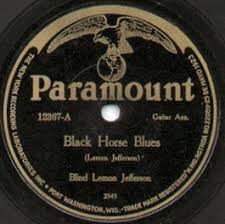
Paramount Records was the premiere label for blues, jazz and country music during the Roaring Twenties, helping to create the mass market for blues and country and recording some of the biggest names of the era.
download

Jellyroll Morton ~ "SIDEWALK BLUES";


Early Years ~ 1916 ~ 1922 ~ Paramount was founded in 1916, growing out of the Wisconsin Chair Company ,which was itself founded in 1888 in Port Washington, Wis, making both phonograph players as well as records. Paramount's early recordings were light classical pieces, sentimental ballads and patriotic anthems of the day. Most of these records were a financial flop and by 1922 the label was deep in debt and desperate.

MA RAINEY (WITH LOUIS ARMSTRONG) ~ "SEE SEE RIDER BLUES";


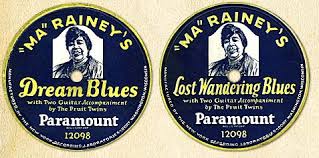
Urban Blues & Jazz on Paramount ~ In 1922 Paramount looking to turn around their flagging fortunes hired Englishman Art Satherly who began recording urban Vaudeville Blues singers such as Ma Rainey, Trixie Smith, Alberta Hunter, Hattie McDaniels & Moanin' Bernice Edwards as well as Hot Jazzmen as JellyRoll Morton, Clarence Williams, Johnny Dodds and Jimmy Noone, Jabo Williams, along with Boogie-Woogie pianists Roosevelt Sykes, Jimmy Blythe, Meade Lux Lewis, Charlie Spand and the white pianist Kansas City Frank Melrose. Satherly boosted Paramount's roster of black artists by hiring Mayo Johnson, an ambitious and well connected talent scout who would later go on to found rival Black Patti Records Paramount also arranged a licensing deal with the failing Black Swan label which included important and big sellers as Ethel Waters & Fletcher Henderson. When Black Swan folded in 1924 Paramount bought out their catalog.
images-1

TRIXIE SMITH ~ "JACK I'M MELLOW";


Rural Blues on Paramount ~ As important as the urban recordings were in keeping the label afloat their biggest (and musically most important) recordings were it's rural blues catalogue. Mostly scouted and discovered by Mayo Williams, a black former executive from Black Swan, Paramount became the first label to score a hit with a rural blues artist starting with Papa Charlie Jackson and quickly growing to include most of the major names of the era including Blind Blake, Pappa Charley Jackson, Charley Patton, Blind Lemon Jefferson, Son House, Skip James, Ramblin' Thomas, Gus Cannon, Frank Stokes, Big Bill Broonzy, Tommy Johnson, William Moore, Bo Weavil Jackson, Bumble Bee Jackson, Henry Townsend, Freddy Spruell (who recorded the first version of "Milkcow Blues"), James Wiggins (who did the first version of "Keep a' knockin") and Bo Carter & the Mississippi Sheiks. The young Tampa Red and Josh White got their starts on Paramount. Soon the rural market was so important to Paramount that they started the "Broadway" budget label to introduce new acts.

PAPA CHARLIE JACKSON ~ "ALL I WANT IS A SPOONFUL";


Old Time Country on Paramount ~ Although known mostly for their "race" records Paramount also recorded a large number of Old time Country artists starting with among the earliest OTM recordings through the budget "Broadway" label in 1922 and later including Wilmer Watts, Charlie Poole (briefly), Arthur Tanner (brother of famed fiddler Gid Tanner), Earl Johnson, Fiddlin' Doc Roberts, Emry Arthur, Davey Miller (AKA The Blind Soldier), Welling & McGhee, The Blue Ridge Highballers and George Washington White.

WILMER WATTS & THE LONELY EAGLES ~ "BEEN ON THE JOB TOO LONG";


Spirituals on Paramount ~ An important part of Paramount's "Race" catalogue were a number of Spirituals and Sermons with The Norfolk Jubilee Quartet and The Rev J.M. Gates being big sellers. Other frequent artists included The Jubilee Gospel Team, Rev. Beaumont, Blind Willie Davis, Blind Connie Rosemond and Rev. Johnny Blakey AKA The Son Of Thunder. Some of the blues artists also recorded spirituals including Blind Lemon Jefferson, Charley Patton and Skip James, albeit under assumed names since many religious people would not buy records from "sinful" blues singers. Some of the white Old Time Country artists also recorded Gospel songs, however unlike the Blues artists the OTM artists recorded under their usual names. Notable OTM-Gospel artists included Sid Harkreader, Joe Reed, Welling and McGhee and The Kentucky Thoroughbreds. Classical baritone Carroll Clark also recorded classic spirituals in a staid, dignified style similar to that of Paul Robeson.

REV. J.M. GATES ~ "DEATH'S BLACK TRAIN IS COMING":


Concert Singing on Paramount ~ Besides the Jazz, Blues, OTM and Gospel which is most treasured by collectors today Paramount also continued to record what was then referred to as "Concert Music" which meant traditional songs such as Stephen Foster songs, Spirituals and light classical ballads and lullabies sung in a stately, restrained carefully enunciated style. Several black artists continued in this style well into the Jazz Age, many had originally recorded for Black Swan and were kept on by Paramount. Best known examples would include Carroll Clark, Florance Cole-Talbert and The Harmony Kings. While these records did not sell as well as the Jazz, Blues and Gospel records they evidently sold well enough to keep them in print for the duration of the label's life.

CARROLL CLARK ~ "OLD DOG TRAY";


Cajun Music on Paramount ~ Paramount also recorded a few early Cajun artists as part of their OTM catalog including Leo Soileau & Robin Moise, John Bertrand & Milton Pitre and Roy Gonzales.

SOILEAU & ROBIN ~ "EASY RIDER BLUES";


The decline and fall of Paramount ~ Like all labels that relied on black or poor white listeners Paramount was hit hard by the Great Depression of the 1930's although the label was already struggling by then. Paramount was hit by the defections of Mayo Williams in 1927 to found his own "Black Patti Records", and Art Satherly in 1928 to start his own "QRS Label". In 1929 Paramount lost it's biggest distributor in Artophone to bankruptcy with others following as the depression deepened. The label was also rocked by the deaths of their biggest seller Blind Lemon Jefferson in 1929 as well as Jimmy Blythe and Charlie Poole in 1931. Paramount cut back on it's staff and recording until shutting down all new recordings and advertising at the end of 1932 although they continued to run an office until 1935. The inactive label was bought out in 1942 and run as a reissue label until much of it's catalog entered the public domain in the 1970's.

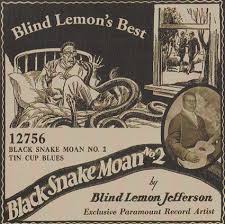
BLIND LEMON JEFFERSON ~ "MATCHBOX BLUES";


The aftermath ~ Many of Paramount's artists fell on hard times during the depression with most of the rural artists being forced into retirement. Many important ones did not survive the depression and war years including Blind Blake who died in 1933, Charlie Patton in 1934, Papa Charlie Jackson & Ma Rainey in 1938, Johnny Dodds in 1940, Kansas City Frank Melrose (murdered) & Jelly Roll Morton in 1941, Trixie Smith (car crash) and Wilmer Watts in 1943 and Jimmy Noone in 1944, and Rev. J.M. Gates in 1945. Carroll Clark appears to have died during this time. However a few did maintain careers into the R&R era such as Roosevelt Sykes, Tampa Red, Josh White, Fletcher Henderson and Ida Cox. A few survivors saw their careers revive with the folk boom of the 1960's including Son House, Skip James, Alberta Hunter and Henry Townsend who kept performing until his death in Dec. 2006.

SKIP JAMES ~ "CROW JAMES";


Today ~ The Paramount catalog is widely available on a number of re-releases, comps and box sets and the original 78's are highly collectible. The building which housed The Wisconsin Chair company and Paramount Records was demolished in 1959 and is now in ruins in an open field with a plaque to mark the spot.

SON HOUSE ~ "DEATH LETTER BLUES";

images-3

Thursday, 27 February 2014

Prof. Kitzel's Time Machine Record Label Profile; Paramount Records

Photobucket

CHARLIE PATTON ~ "SHAKE IT & BREAK IT";


Paramount Records was the premiere label for blues, jazz and country music during the Roaring Twenties, helping to create the mass market for blues and country and recording some of the biggest names of the era.

Photobucket

Jellyroll Morton ~ "SIDEWALK BLUES";


Early Years ~ 1916 ~ 1922~ Paramount was founded in 1916, growing out of the Wisconsin Chair Company ,which was itself founded in 1888 in Port Washington, Wis. , making both phonograph players as well as records. Paramount's early recordings were light classical pieces, sentimental ballads and patriotic anthems of the day. Most of these records were a financial flop and by 1922 the label was deep in debt and desperate.

MA RAINEY (WITH LOUIS ARMSTRONG) ~ "SEE SEE RIDER BLUES";


Urban Blues & Jazz on Paramount ~ In 1922 Paramount looking to turn around their flagging fortunes hired Englishman Art Satherly who began recording urban Vaudeville Blues singers such as Ma Rainey, Trixie Smith, Alberta Hunter, Hattie McDaniels & Moanin' Bernice Edwards as well as Hot Jazzmen as JellyRoll Morton, Clarence Williams, Johnny Dodds and Jimmy Noone, Jabo Williams, along with Boogie-Woogie pianists Roosevelt Sykes, Jimmy Blythe, Meade Lux Lewis, Charlie Spand and the white pianist Kansas City Frank Melrose. Satherly boosted Paramount's roster of black artists by hiring Mayo Johnson, an ambitious and well connected talent scout who would later go on to found rival Black Patti Records Paramount also arranged a licensing deal with the failing Black Swan label which included important and big sellers as Ethel Waters & Fletcher Henderson. When Black Swan folded in 1924 Paramount bought out their catalog.

TRIXIE SMITH ~ "JACK I'M MELLOW";


Rural Blues on Paramount ~ As important as the urban recordings were in keeping the label afloat their biggest (and musically most important) recordings were it's rural blues catalogue. Mostly scouted and discovered by Mayo Williams, a black former executive from Black Swan, Paramount became the first label to score a hit with a rural blues artist starting with Papa Charlie Jackson and quickly growing to include most of the major names of the era including Blind Blake, Pappa Charley Jackson, Charley Patton, Blind Lemon Jefferson, Son House, Skip James, Ramblin' Thomas, Gus Cannon, Frank Stokes, Big Bill Broonzy, Tommy Johnson, William Moore, Bo Weavil Jackson, Bumble Bee Jackson, Henry Townsend, Freddy Spruell (who recorded the first version of "Milkcow Blues"), James Wiggins (who did the first version of "Keep a' knockin") and Bo Carter & the Mississippi Sheiks. The young Tampa Red and Josh White got their starts on Paramount. Soon the rural market was so important to Paramount that they started the "Broadway" budget label to introduce new acts.

PAPA CHARLIE JACKSON ~ "YOU PUT IT, I'LL TAKE IT OUT";


Old Time Country on Paramount ~ Although known mostly for their "race" records Paramount also recorded a large number of Old time Country artists starting with among the earliest OTM recordings through the budget "Broadway" label in 1922 and later including Wilmer Watts, Charlie Poole (briefly), Arthur Tanner (brother of famed fiddler Gid Tanner), Earl Johnson, Fiddlin' Doc Roberts, Emry Arthur, Davey Miller (AKA The Blind Soldier), Welling & McGhee, The Blue Ridge Highballers and George Washington White.

WILMER WATTS & THE LONELY EAGLES ~ "BEEN ON THE JOB TOO LONG";


Spirituals on Paramount ~ An important part of Paramount's "Race" catalogue were a number of Spirituals and Sermons with The Norfolk Jubilee Quartet and The Rev J.M. Gates being big sellers. Other frequent artists included The Jubilee Gospel Team, Rev. Beaumont, Blind Willie Davis, Blind Connie Rosemond and Rev. Johnny Blakey AKA The Son Of Thunder. Some of the blues artists also recorded spirituals including Blind Lemon Jefferson, Charley Patton and Skip James, albeit under assumed names since many religious people would not buy records from "sinful" blues singers. Some of the white Old Time Country artists also recorded Gospel songs, however unlike the Blues artists the OTM artists recorded under their usual names. Notable OTM-Gospel artists included Sid Harkreader, Joe Reed, Welling and McGhee and The Kentucky Thoroughbreds. Classical baritone Carroll Clark also recorded classic spirituals in a staid, dignified style similar to that of Paul Robeson.

REV. J.M. GATES ~ "DEATH'S BLACK TRAIN IS COMING":


Concert Singing on Paramount ~ Besides the Jazz, Blues, OTM and Gospel which is most treasured by collectors today Paramount also continued to record what was then referred to as "Concert Music" which meant traditional songs such as Stephen Foster songs, Spirituals and light classical ballads and lullabies sung in a stately, restrained carefully enunciated style. Several black artists continued in this style well into the Jazz Age, many had originally recorded for Black Swan and were kept on by Paramount. Best known examples would include Carroll Clark, Florance Cole-Talbert and The Harmony Kings. While these records did not sell as well as the Jazz, Blues and Gospel records they evidently sold well enough to keep them in print for the duration of the label's life.

CARROLL CLARK ~ "OLD DOG TRAY";


Cajun Music on Paramount ~ Paramount also recorded a few early Cajun artists as part of their OTM catalog including Leo Soileau & Robin Moise, John Bertrand & Milton Pitre and Roy Gonzales.

SOILEAU & ROBIN ~ "EASY RIDER BLUES";


The decline and fall of Paramount ~ Like all labels that relied on black or poor white listeners Paramount was hit hard by the Great Depression of the 1930's although the label was already struggling by then. Paramount was hit by the defections of Mayo Williams in 1927 to found his own "Black Patti Records", and Art Satherly in 1928 to start his own "QRS Label". In 1929 Paramount lost it's biggest distributor in Artophone to bankruptcy with others following as the depression deepened. The label was also rocked by the deaths of their biggest seller Blind Lemon Jefferson in 1929 as well as Jimmy Blythe and Charlie Poole in 1931. Paramount cut back on it's staff and recording until shutting down all new recordings and advertising at the end of 1932 although they continued to run an office until 1935. The inactive label was bought out in 1942 and run as a reissue label until much of it's catalog entered the public domain in the 1970's.

BLIND LEMON JEFFERSON ~ "MATCHBOX BLUES";


The aftermath ~ Many of Paramount's artists fell on hard times during the depression with most of the rural artists being forced into retirement. Many important ones did not survive the depression and war years including Blind Blake who died in 1933, Charlie Patton in 1934, Papa Charlie Jackson & Ma Rainey in 1938, Johnny Dodds in 1940, Kansas City Frank Melrose (murdered) & Jelly Roll Morton in 1941, Trixie Smith (car crash) and Wilmer Watts in 1943 and Jimmy Noone in 1944, and Rev. J.M. Gates in 1945. Carroll Clark appears to have died during this time. However a few did maintain careers into the R&R era such as Roosevelt Sykes, Tampa Red, Josh White, Fletcher Henderson and Ida Cox. A few survivors saw their careers revive with the folk boom of the 1960's including Son House, Skip James, Alberta Hunter and Henry Townsend who kept performing until his death in Dec. 2006.

SKIP JAMES ~ "CROW JAMES";


Today ~ The Paramount catalog is widely available on a number of re-releases, comps and box sets and the original 78's are highly collectible. The building which housed The Wisconsin Chair company and Paramount Records was demolished in 1959 and is now in ruins in an open field with a plaque to mark the spot. In 2014 Revanent Records, in collaboration with Jack White, released perhaps the elaborate box set of all time; a suitcase sized box replica of a Gramaphone containing a lush book, coloured vinyl and an mp3 stick holding over 800 songs form most musical genres. It retails for around $500, which is more than many of the artists actually made in the first place.

Photobucket

SON HOUSE ~ "DEATH LETTER BLUES";


Tuesday, 5 April 2011

Professor Kitzel's Time Machine Profile; Ma Rainey

download-1

~Ma Rainey 1886~1939 was not the first black woman to record the blues (Mamie Smith did that in 1920) but Ma Rainey was the first big star. By the time Mamie Smith recorded "Crazy Blues" Ma Rainey was already the best known blues singer by far. She would remain a major figure for the rest of the era discovering and becoming an inspiration for future generations af blues, jazz and soul singers from Bessie Smith to Janis Joplin. ..

MA RAINEY ~ "PROVE IT ON ME BLUES"


~Early Years~
Born Gertrude Pridgett in 1886 (according to her) or 1882 (according to a census report) in either Alabama or Georgia into a family of minstrel show performers, she was already onstage herself by at least age 14 according to surviving records. Pridgett joined the Rabbit Foot Minstrels, a popular traveling minstrel troop in the 1890's marrying William "Pa" Rainey an older song and dance comedian in 1904, they thereafter billed themselves as Ma and Pa Rainey. According to Ma she heard a young black girl singing a blues type song in 1904 inspiring her to adopt the style which she claimed she also named "The Blues" however every other source disputes this (including W.C. Handy, Jellyroll Morton, Bunk Johnson, Gus Cannon and Leadbelly) saying the blues had existed since the 1880's. At this point the Raineys began billing themselves as "The Assassinaters of the Blues" and touring heavily especially throughout the south. The Raineys became one of the most popular acts of the era. Ma was a flamboyant, larger than life character; a large woman with multiple chins and gold teeth she developed costumes with flowing gowns, feathered tiaras, boas, huge glittering rings, ropes of pearls, dangling earnings, bejeweled fans and long necklaces made from gold pieces. She entered the stage from inside a giant prop gramophone horn scarlet drapes, gold ropes, leopard skin furniture and fake tropical plants. Pa Rainey acted as emcee, telling jokes, singing a few nonsense songs, doing a few dance steps as well as his specialty, placing large objects in his mouth. Obviously the main attraction was Ma with sang with a powerful voice did dance steps and told ribald jokes. There was also a chorus line one of whom was the young Bessie Smith who Ma discovered in 1912 and trained as a singer and performer until Bessie went solo around 1915. ..

MA RAINEY ~"OH BLUES OH BLUES";


~Recordings~ ..
After Mamie Smith's highly successful 1920 recordings record companies started looking for more blues women to record but in spite of her fame Ma did not actually record until 1923 when she signed with Paramount Records. Her records were an immediate success and of a high quality using a wide variety of bands from top-notch New Orleans style Hot Jazz bands to Memphis style Jug Bands to duets with blues singer Papa Charlie Jackson. Her records were rife with double and sometimes triple entendres and frequent references to her bi-sexuality as well as infidelity, boozing and jail. However unlike some other blues women her songs were mostly upbeat and shamelessly defiant rather than mournful. She continued to record and tour successfully throughout the 1920's but the coming of the great depression and changing tastes brought an end to her recordings after 1929. She continued to perform until 1935 when she retired to Columbus, Georgia. Unlike most of her fellow blues and jazz artists Ma was a good business-woman who made and saved enough money to buy her own home and invest in two theaters in Columbus. She devoted the rest of her time to the baptist church until she died of a heart attack in 1939. ..

MA RAINEY ~ "SEE SEE RIDER";


~Legacy~ ..
Ma Rainey's influence is deep and wide, covering virtually every female blues, jazz, gospel, soul and rock and roll singer from the 1920's to the 1970's starting obviously with Bessie Smith down through Billie Holliday to Mahalia Jackson to Dinah Washington to Aretha Franklin to Janis Joplin to Queen Latifa. Her sense of style is still the archetype for the blues or soul woman. Her records have been reissued on cd and her old records are highly collectable. A play "Ma Rainey's Black Bottom" loosely based on her was written in 1982 by August Wilson. Ma Rainey was inducted into the Blues Hall of Fame in 1983 and the Rock and Roll Hall of Fame in 1990 and honored with a U.S. postage stamp in 1994. Another younger and unrelated singer billed herself as Memphis Ma Rainey in the 1950's and Ma's grand-daughter Rosemary is also a singer who sings in Ma's style.

MA RAINEY ~ "DEEP MOANING BLUES";


Members;
Ma Rainey~vocals w/ various members including; Louis Armstrong ~ trumpet, Kid Ory ~ trombone, Coleman Hawkins ~ sax, Tampa Red~guitar, Georgia Tom Dorsey ~ piano, Fletcher Henderson ~ piano, Tiny Parham ~ piano, Jimmy Blythe ~ piano, Doc Cheatham ~ sax, Papa Charlie Jackson ~ banjo

MA RAINEY ~ "MA RAINEY'S BLACK BOTTOM"