Showing posts with label Paramount Records. Show all posts

Sunday, 29 December 2019

Professor Kitzel's Record Label Profile; Paramount Records

download-1

images

CHARLIE PATTON ~ "SHAKE IT & BREAK IT";


Paramount Records was the premiere label for blues, jazz and country music during the Roaring Twenties, helping to create the mass market for blues and country and recording some of the biggest names of the era.
download

Jellyroll Morton ~ "SIDEWALK BLUES";


Early Years ~ 1916 ~ 1922 ~ Paramount was founded in 1916, growing out of the Wisconsin Chair Company ,which was itself founded in 1888 in Port Washington, Wis, making both phonograph players as well as records. Paramount's early recordings were light classical pieces, sentimental ballads and patriotic anthems of the day. Most of these records were a financial flop and by 1922 the label was deep in debt and desperate.

MA RAINEY (WITH LOUIS ARMSTRONG) ~ "SEE SEE RIDER BLUES";


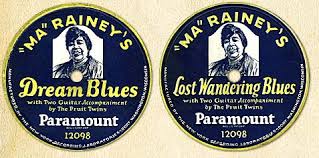
Urban Blues & Jazz on Paramount ~ In 1922 Paramount looking to turn around their flagging fortunes hired Englishman Art Satherly who began recording urban Vaudeville Blues singers such as Ma Rainey, Trixie Smith, Alberta Hunter, Hattie McDaniels & Moanin' Bernice Edwards as well as Hot Jazzmen as JellyRoll Morton, Clarence Williams, Johnny Dodds and Jimmy Noone, Jabo Williams, along with Boogie-Woogie pianists Roosevelt Sykes, Jimmy Blythe, Meade Lux Lewis, Charlie Spand and the white pianist Kansas City Frank Melrose. Satherly boosted Paramount's roster of black artists by hiring Mayo Johnson, an ambitious and well connected talent scout who would later go on to found rival Black Patti Records Paramount also arranged a licensing deal with the failing Black Swan label which included important and big sellers as Ethel Waters & Fletcher Henderson. When Black Swan folded in 1924 Paramount bought out their catalog.
images-1

TRIXIE SMITH ~ "JACK I'M MELLOW";


Rural Blues on Paramount ~ As important as the urban recordings were in keeping the label afloat their biggest (and musically most important) recordings were it's rural blues catalogue. Mostly scouted and discovered by Mayo Williams, a black former executive from Black Swan, Paramount became the first label to score a hit with a rural blues artist starting with Papa Charlie Jackson and quickly growing to include most of the major names of the era including Blind Blake, Pappa Charley Jackson, Charley Patton, Blind Lemon Jefferson, Son House, Skip James, Ramblin' Thomas, Gus Cannon, Frank Stokes, Big Bill Broonzy, Tommy Johnson, William Moore, Bo Weavil Jackson, Bumble Bee Jackson, Henry Townsend, Freddy Spruell (who recorded the first version of "Milkcow Blues"), James Wiggins (who did the first version of "Keep a' knockin") and Bo Carter & the Mississippi Sheiks. The young Tampa Red and Josh White got their starts on Paramount. Soon the rural market was so important to Paramount that they started the "Broadway" budget label to introduce new acts.

PAPA CHARLIE JACKSON ~ "ALL I WANT IS A SPOONFUL";


Old Time Country on Paramount ~ Although known mostly for their "race" records Paramount also recorded a large number of Old time Country artists starting with among the earliest OTM recordings through the budget "Broadway" label in 1922 and later including Wilmer Watts, Charlie Poole (briefly), Arthur Tanner (brother of famed fiddler Gid Tanner), Earl Johnson, Fiddlin' Doc Roberts, Emry Arthur, Davey Miller (AKA The Blind Soldier), Welling & McGhee, The Blue Ridge Highballers and George Washington White.

WILMER WATTS & THE LONELY EAGLES ~ "BEEN ON THE JOB TOO LONG";


Spirituals on Paramount ~ An important part of Paramount's "Race" catalogue were a number of Spirituals and Sermons with The Norfolk Jubilee Quartet and The Rev J.M. Gates being big sellers. Other frequent artists included The Jubilee Gospel Team, Rev. Beaumont, Blind Willie Davis, Blind Connie Rosemond and Rev. Johnny Blakey AKA The Son Of Thunder. Some of the blues artists also recorded spirituals including Blind Lemon Jefferson, Charley Patton and Skip James, albeit under assumed names since many religious people would not buy records from "sinful" blues singers. Some of the white Old Time Country artists also recorded Gospel songs, however unlike the Blues artists the OTM artists recorded under their usual names. Notable OTM-Gospel artists included Sid Harkreader, Joe Reed, Welling and McGhee and The Kentucky Thoroughbreds. Classical baritone Carroll Clark also recorded classic spirituals in a staid, dignified style similar to that of Paul Robeson.

REV. J.M. GATES ~ "DEATH'S BLACK TRAIN IS COMING":


Concert Singing on Paramount ~ Besides the Jazz, Blues, OTM and Gospel which is most treasured by collectors today Paramount also continued to record what was then referred to as "Concert Music" which meant traditional songs such as Stephen Foster songs, Spirituals and light classical ballads and lullabies sung in a stately, restrained carefully enunciated style. Several black artists continued in this style well into the Jazz Age, many had originally recorded for Black Swan and were kept on by Paramount. Best known examples would include Carroll Clark, Florance Cole-Talbert and The Harmony Kings. While these records did not sell as well as the Jazz, Blues and Gospel records they evidently sold well enough to keep them in print for the duration of the label's life.

CARROLL CLARK ~ "OLD DOG TRAY";


Cajun Music on Paramount ~ Paramount also recorded a few early Cajun artists as part of their OTM catalog including Leo Soileau & Robin Moise, John Bertrand & Milton Pitre and Roy Gonzales.

SOILEAU & ROBIN ~ "EASY RIDER BLUES";


The decline and fall of Paramount ~ Like all labels that relied on black or poor white listeners Paramount was hit hard by the Great Depression of the 1930's although the label was already struggling by then. Paramount was hit by the defections of Mayo Williams in 1927 to found his own "Black Patti Records", and Art Satherly in 1928 to start his own "QRS Label". In 1929 Paramount lost it's biggest distributor in Artophone to bankruptcy with others following as the depression deepened. The label was also rocked by the deaths of their biggest seller Blind Lemon Jefferson in 1929 as well as Jimmy Blythe and Charlie Poole in 1931. Paramount cut back on it's staff and recording until shutting down all new recordings and advertising at the end of 1932 although they continued to run an office until 1935. The inactive label was bought out in 1942 and run as a reissue label until much of it's catalog entered the public domain in the 1970's.

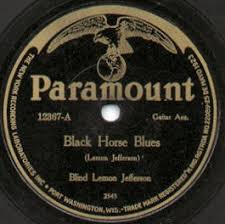
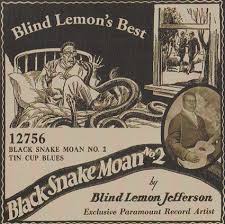
BLIND LEMON JEFFERSON ~ "MATCHBOX BLUES";


The aftermath ~ Many of Paramount's artists fell on hard times during the depression with most of the rural artists being forced into retirement. Many important ones did not survive the depression and war years including Blind Blake who died in 1933, Charlie Patton in 1934, Papa Charlie Jackson & Ma Rainey in 1938, Johnny Dodds in 1940, Kansas City Frank Melrose (murdered) & Jelly Roll Morton in 1941, Trixie Smith (car crash) and Wilmer Watts in 1943 and Jimmy Noone in 1944, and Rev. J.M. Gates in 1945. Carroll Clark appears to have died during this time. However a few did maintain careers into the R&R era such as Roosevelt Sykes, Tampa Red, Josh White, Fletcher Henderson and Ida Cox. A few survivors saw their careers revive with the folk boom of the 1960's including Son House, Skip James, Alberta Hunter and Henry Townsend who kept performing until his death in Dec. 2006.

SKIP JAMES ~ "CROW JAMES";


Today ~ The Paramount catalog is widely available on a number of re-releases, comps and box sets and the original 78's are highly collectible. The building which housed The Wisconsin Chair company and Paramount Records was demolished in 1959 and is now in ruins in an open field with a plaque to mark the spot.

SON HOUSE ~ "DEATH LETTER BLUES";

images-3

Tuesday, 21 April 2015

Prof. Kitzle's Time Machine Profile; Wilmer Watts

Photobucket

Wilmer Watts (1897 - 1943) Was a an Old Time Country Music singer, player and bandleader who recorded a series of 78 records for Paramount Records in the 1920's. Although not as well known as fellow North Carlina singer/banjo player Charlie Poole, who has undergone a revival over the last few years, Watts is for my money a more interesting artist with a crude but distinctive style.

wilmer watts


Born in Mount Tabor (now Tabor City) a market town in Columbus County, between 1896 and 1898. After he moved to the city of Belmont where he worked as a worker in textile factories. Having learned several instruments including banjo, fiddle, guitar, dobro, autoharp, harmonica, musical saw and drums he became a semi-professional musician around 1921 and made his first recordings in January or Feburary 1927 as a duo with local guitarist Charlie Wilson (1900 - ?) with a single entitled "The Sporting Cowboy" which was not released at the time although it was later rerecorded. With a new trio under the name of Wilmer Watts and His Lonely Eagles they recorded six sides for Paramount Records in 1927 using a line-up that included Charles Freshour (1900 - 1959) on guitar and the then unusual steel guitar which was played by Wilson. In 1929 he returned to Paramount's New York studios. This time Wilson was replaced on steel guitar by Palmer Rhyne (1904 - 1967), a fellow factory worker friend of Watts. These sessions resulted in fourteen sides.

RECORDINGS AND MUSICAL STYLE;

300x300


Wilmer's banjo playing was quite simple and repetitive, staying to mid-tempo songs and quite different from the more complex ragtime influenced picking of Charlie Poole or blues singer Papa Charlie Jackson or the fast choppy style of Uncle Dave Macon. Unlike most of his contemporaries Watts' musical influences seem to be based mostly on traditional Anglo-Celtic sources along with blues, ragtime, or minstrelsy and his songs have a distinctive droning modal quality compared to those of his North Carolina contemporary Charlie Poole. In his lyrical themes (at least in his recorded works) Watts largely avoided traditional folk songs and focused on more modern themes ranging from blues to a few political protest songs usually in a mocking vein similar to those of song writer Joe Hill collected in the "Little Red Songbook" of the I.W.W.

300x300fff


Among Watts' best known recordings are;

full


"Cotton Mill Blues"; a bluesy protest song about the plight of factory workers, based on a 1900 poem "A Factory Rhyme" by George Stutts.

"COTTON MILL BLUES" (an explanation of the song with cover versions, done by a descendent of Posey Rorrer, who played with the better known fellow North Carolina singer/banjoist Charlie Poole )


"Been On The Job Too Long"; a murder ballad later covered by such artists as Leadbelly and Bob Dylan under the title of "Duncan and Brady".

"BEEN ON THE JOB TOO LONG";

"Walk Right In Belmont"; the first known recorded version of "Midnight Special", a later standard later covered by Leadbell>, Creedence Clearwater Revival and Mac Wiseman. This single was originally released under the name "Watts & Wilson" and later through Paramount's subsidiary label Broadway Records under the name "Watts & Wiggins". Note this song is not to be confused with the Gus Cannon song "Walk Right In".

"WALK RIGHT IN BELMONT";


"Banjo Sam"; an especially repetitive modal song with surrealistic lyrics later covered by Pete Seeger.

"BANJO SAM";


"Knocking Down Casey Jones"; a version of one of the many tribute songs then common to famous train engineer Casey Jones. This song is notably more heroic than Joe Hill's I.W.W. version.

"KNOCKING DOWN CASEY JONES";


"Fighting in The War With Spain"; an anti-war song mocking the Spanish-American War in which Watts makes light of the war and portrays himself as a deserter.

"FIGHTING IN THE WAR WITH SPAIN";


"The Fate Of Rhoda Sweetin"; A murder ballad sung and reportedly written by Charles Freshour about his own sister. This single was credited to Charles Freshour and The Lonely Eagles.

"THE FATE OF RHODA SWEETIN";


"She's A Hard Boiled Rose"; A version of a Tin Pan Alley song later used in another version by stripper Gypsie Rose Lee.

"SHE'S A HARD BOILED ROSE";


"Charles Guitaw"; A ballad (with a misspelled title) about Charles Guiteau, the assassin of President James Garfield. This song was also covered by Kelly Harrell.

"CHARLES GUITAW";


"CHAIN GANG BLUES";


k32b0j


LATER CAREER;

After the 1927 sessions Wilson left the group and was replaced by Palmer Rayne for the 1929 sessions. The Great Depression ended the recordings of many rural artists and Paramount Records went out of business in 1935 so Watts made no further recordings. He returned to Belmont were he continued working as a textile worker, tenant farmer and gas station owner as well as a part-time musician albeit without the Lonely Eagles who broke up. Watts often gigged as a one-man-band playing as many as five instruments at once. In 1931 Watts won a talent contest for his act awarded by Uncle Dave Macon. Later from the mid nineteen-thirties he formed a Southern Gospel group with his daughters as the Watts Singers who performed two regular shows on the radio but did not record. He was diagnosed with stomach cancer and retired in 1939 dying in 1944 at the age of approximately 47. His daughters continued as the Watts Singers with one of their husbands replacing Wilmer into the 1960's but did not record.

OTHER MEDIA;

index


The only photo of Watts commonly known (showing him holding a fiddle rather than his usual banjo) was reproduced by the artist R. Crumb for a collection of trading cards of old time country musicians.

full


Thursday, 27 February 2014

Prof. Kitzel's Time Machine Record Label Profile; Paramount Records

Photobucket

CHARLIE PATTON ~ "SHAKE IT & BREAK IT";


Paramount Records was the premiere label for blues, jazz and country music during the Roaring Twenties, helping to create the mass market for blues and country and recording some of the biggest names of the era.

Photobucket

Jellyroll Morton ~ "SIDEWALK BLUES";


Early Years ~ 1916 ~ 1922~ Paramount was founded in 1916, growing out of the Wisconsin Chair Company ,which was itself founded in 1888 in Port Washington, Wis. , making both phonograph players as well as records. Paramount's early recordings were light classical pieces, sentimental ballads and patriotic anthems of the day. Most of these records were a financial flop and by 1922 the label was deep in debt and desperate.

MA RAINEY (WITH LOUIS ARMSTRONG) ~ "SEE SEE RIDER BLUES";


Urban Blues & Jazz on Paramount ~ In 1922 Paramount looking to turn around their flagging fortunes hired Englishman Art Satherly who began recording urban Vaudeville Blues singers such as Ma Rainey, Trixie Smith, Alberta Hunter, Hattie McDaniels & Moanin' Bernice Edwards as well as Hot Jazzmen as JellyRoll Morton, Clarence Williams, Johnny Dodds and Jimmy Noone, Jabo Williams, along with Boogie-Woogie pianists Roosevelt Sykes, Jimmy Blythe, Meade Lux Lewis, Charlie Spand and the white pianist Kansas City Frank Melrose. Satherly boosted Paramount's roster of black artists by hiring Mayo Johnson, an ambitious and well connected talent scout who would later go on to found rival Black Patti Records Paramount also arranged a licensing deal with the failing Black Swan label which included important and big sellers as Ethel Waters & Fletcher Henderson. When Black Swan folded in 1924 Paramount bought out their catalog.

TRIXIE SMITH ~ "JACK I'M MELLOW";


Rural Blues on Paramount ~ As important as the urban recordings were in keeping the label afloat their biggest (and musically most important) recordings were it's rural blues catalogue. Mostly scouted and discovered by Mayo Williams, a black former executive from Black Swan, Paramount became the first label to score a hit with a rural blues artist starting with Papa Charlie Jackson and quickly growing to include most of the major names of the era including Blind Blake, Pappa Charley Jackson, Charley Patton, Blind Lemon Jefferson, Son House, Skip James, Ramblin' Thomas, Gus Cannon, Frank Stokes, Big Bill Broonzy, Tommy Johnson, William Moore, Bo Weavil Jackson, Bumble Bee Jackson, Henry Townsend, Freddy Spruell (who recorded the first version of "Milkcow Blues"), James Wiggins (who did the first version of "Keep a' knockin") and Bo Carter & the Mississippi Sheiks. The young Tampa Red and Josh White got their starts on Paramount. Soon the rural market was so important to Paramount that they started the "Broadway" budget label to introduce new acts.

PAPA CHARLIE JACKSON ~ "YOU PUT IT, I'LL TAKE IT OUT";


Old Time Country on Paramount ~ Although known mostly for their "race" records Paramount also recorded a large number of Old time Country artists starting with among the earliest OTM recordings through the budget "Broadway" label in 1922 and later including Wilmer Watts, Charlie Poole (briefly), Arthur Tanner (brother of famed fiddler Gid Tanner), Earl Johnson, Fiddlin' Doc Roberts, Emry Arthur, Davey Miller (AKA The Blind Soldier), Welling & McGhee, The Blue Ridge Highballers and George Washington White.

WILMER WATTS & THE LONELY EAGLES ~ "BEEN ON THE JOB TOO LONG";


Spirituals on Paramount ~ An important part of Paramount's "Race" catalogue were a number of Spirituals and Sermons with The Norfolk Jubilee Quartet and The Rev J.M. Gates being big sellers. Other frequent artists included The Jubilee Gospel Team, Rev. Beaumont, Blind Willie Davis, Blind Connie Rosemond and Rev. Johnny Blakey AKA The Son Of Thunder. Some of the blues artists also recorded spirituals including Blind Lemon Jefferson, Charley Patton and Skip James, albeit under assumed names since many religious people would not buy records from "sinful" blues singers. Some of the white Old Time Country artists also recorded Gospel songs, however unlike the Blues artists the OTM artists recorded under their usual names. Notable OTM-Gospel artists included Sid Harkreader, Joe Reed, Welling and McGhee and The Kentucky Thoroughbreds. Classical baritone Carroll Clark also recorded classic spirituals in a staid, dignified style similar to that of Paul Robeson.

REV. J.M. GATES ~ "DEATH'S BLACK TRAIN IS COMING":


Concert Singing on Paramount ~ Besides the Jazz, Blues, OTM and Gospel which is most treasured by collectors today Paramount also continued to record what was then referred to as "Concert Music" which meant traditional songs such as Stephen Foster songs, Spirituals and light classical ballads and lullabies sung in a stately, restrained carefully enunciated style. Several black artists continued in this style well into the Jazz Age, many had originally recorded for Black Swan and were kept on by Paramount. Best known examples would include Carroll Clark, Florance Cole-Talbert and The Harmony Kings. While these records did not sell as well as the Jazz, Blues and Gospel records they evidently sold well enough to keep them in print for the duration of the label's life.

CARROLL CLARK ~ "OLD DOG TRAY";


Cajun Music on Paramount ~ Paramount also recorded a few early Cajun artists as part of their OTM catalog including Leo Soileau & Robin Moise, John Bertrand & Milton Pitre and Roy Gonzales.

SOILEAU & ROBIN ~ "EASY RIDER BLUES";


The decline and fall of Paramount ~ Like all labels that relied on black or poor white listeners Paramount was hit hard by the Great Depression of the 1930's although the label was already struggling by then. Paramount was hit by the defections of Mayo Williams in 1927 to found his own "Black Patti Records", and Art Satherly in 1928 to start his own "QRS Label". In 1929 Paramount lost it's biggest distributor in Artophone to bankruptcy with others following as the depression deepened. The label was also rocked by the deaths of their biggest seller Blind Lemon Jefferson in 1929 as well as Jimmy Blythe and Charlie Poole in 1931. Paramount cut back on it's staff and recording until shutting down all new recordings and advertising at the end of 1932 although they continued to run an office until 1935. The inactive label was bought out in 1942 and run as a reissue label until much of it's catalog entered the public domain in the 1970's.

BLIND LEMON JEFFERSON ~ "MATCHBOX BLUES";


The aftermath ~ Many of Paramount's artists fell on hard times during the depression with most of the rural artists being forced into retirement. Many important ones did not survive the depression and war years including Blind Blake who died in 1933, Charlie Patton in 1934, Papa Charlie Jackson & Ma Rainey in 1938, Johnny Dodds in 1940, Kansas City Frank Melrose (murdered) & Jelly Roll Morton in 1941, Trixie Smith (car crash) and Wilmer Watts in 1943 and Jimmy Noone in 1944, and Rev. J.M. Gates in 1945. Carroll Clark appears to have died during this time. However a few did maintain careers into the R&R era such as Roosevelt Sykes, Tampa Red, Josh White, Fletcher Henderson and Ida Cox. A few survivors saw their careers revive with the folk boom of the 1960's including Son House, Skip James, Alberta Hunter and Henry Townsend who kept performing until his death in Dec. 2006.

SKIP JAMES ~ "CROW JAMES";


Today ~ The Paramount catalog is widely available on a number of re-releases, comps and box sets and the original 78's are highly collectible. The building which housed The Wisconsin Chair company and Paramount Records was demolished in 1959 and is now in ruins in an open field with a plaque to mark the spot. In 2014 Revanent Records, in collaboration with Jack White, released perhaps the elaborate box set of all time; a suitcase sized box replica of a Gramaphone containing a lush book, coloured vinyl and an mp3 stick holding over 800 songs form most musical genres. It retails for around $500, which is more than many of the artists actually made in the first place.

Photobucket

SON HOUSE ~ "DEATH LETTER BLUES";